Choosing among China’s top 10 Longspan Storage rack manufacturers requires more than comparing catalog photos. A serious buyer must examine load capacity, beam thickness, upright design, surface treatment, and production consistency. In a working warehouse, these details become visible quickly. A bent beam, uneven shelf, or poorly finished weld can slow picking and create avoidable safety concerns. The strongest manufacturers usually provide technical drawings, load tables, sample inspections, and clear installation guidance.
Warehouse systems expert John Mannix once said, “Storage is not just about holding products; it is about supporting the flow of work.” This principle matters when evaluating Longspan Storage suppliers. A rack may look economical, yet poor access can increase handling time. Adjustable levels, modular frames, and compatible accessories should match the products, workers, and available floor space. Experienced manufacturers also understand export packaging, communication, quality documentation, and project timelines. Those practical abilities often separate a dependable factory from a persuasive sales office.
No ranking is perfect. Supplier capabilities change, and online information can remain incomplete. Buyers should verify certifications, factory records, reference projects, and inspection results before signing an agreement. Visiting a production line is even better, when practical. Watch how workers weld, coat, measure, and package each component. This guide compares ten notable Chinese manufacturers through those measurable points, while recognizing that the cheapest quotation is rarely the complete answer. Performance depends on design accuracy, installation quality, maintenance, and honest cooperation. That is the part many lists overlook.
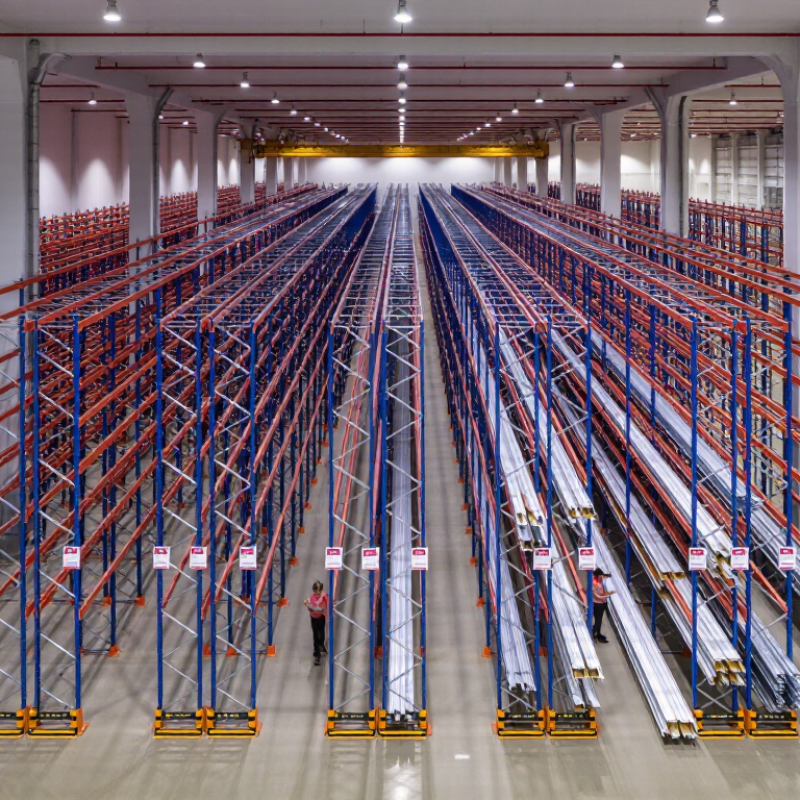
Longspan storage racking is a flexible, manually loaded system for medium-duty goods. It uses upright frames, horizontal beams, and adjustable shelves or panels. Unlike pallet racking, it usually supports cartons, spare parts, tools, and packaged materials. Workers can access each level directly, without forklifts. That makes it practical for warehouses with many product types and moderate stock volumes.
Its design suits maintenance rooms, e-commerce storage areas, workshops, archives, and retail backrooms. The Material Handling Institute’s 2024 Annual Industry Report identified inventory and network optimization as major technology priorities for supply-chain leaders. Longspan racks support that goal by improving vertical space use and shortening picking routes.
A typical bay may hold several shelf levels, with clear labels and aisle widths matched to hand trucks. Small details matter. Poor labeling quickly creates picking errors.
Load planning remains essential. Engineers should verify beam capacity, shelf deflection, floor conditions, and anchoring needs before installation. Relevant rack safety guidance, including ANSI/RMI MH16.1 principles, helps structure this review. Yet a perfect layout rarely survives daily operations. Products change. Staff habits change. I would test one section first, measure retrieval time, and revise the spacing. That practical feedback often matters more than a neat drawing.
How to Evaluate China’s Longspan Rack Manufacturers
China’s longspan rack market serves warehouses, workshops, archives, and retail backrooms. Choosing a supplier requires more than comparing unit prices. MHI’s 2024 Annual Industry Report found that 55% of supply-chain professionals planned to increase automation investment. This trend makes rack compatibility more important. Ask manufacturers for load calculations, steel specifications, weld inspection records, and finished-product tolerance data. A reliable factory should explain beam deflection, upright capacity, and anchoring requirements in clear terms.
Visit the production site, or arrange an independent audit. Check coil storage, cutting accuracy, welding stations, powder-coating thickness, and final inspection areas. Request samples from different production batches. Look closely at bolt holes, connector fit, surface coverage, and sharp edges. ISO 9001 certification helps, but it does not prove every rack is safe or durable. Demand test reports from accredited laboratories, with identifiable methods and dates. EN 15512 or equivalent engineering references can improve technical confidence.
Price can hide risk.
Compare landed cost, packaging strength, replacement-part availability, and installation guidance. Research and Markets has projected continued growth in warehouse storage equipment, driven by e-commerce and logistics expansion. However, market growth does not guarantee supplier quality. I have seen impressive catalogs fail under basic documentation checks. That remains an uncomfortable lesson. A small pilot order, third-party inspection, and written warranty often reveal more than a polished factory tour. Evaluate communication, corrective-action speed, and whether the manufacturer admits design limits. Reliable partners do not promise unlimited capacity.
Use this neutral procurement framework to compare manufacturers without relying on brand names. The percentages represent suggested evaluation weights for longspan storage rack sourcing, not market share or individual company rankings.
How to use it: Request documented evidence for each category, including load-test data, material specifications, coating records, quality certificates, delivery history, warranty terms, and project references. Apply the weights consistently when comparing suppliers.
China’s top ten longspan storage rack manufacturers serve warehouses, workshops, archives, and retail backrooms. Their products usually include boltless shelving, steel beams, adjustable decks, and multi-level storage systems. Many operate in manufacturing centers such as Jiangsu, Zhejiang, Guangdong, and Shandong.
The strongest suppliers differ by practical experience. Some focus on heavy-duty frames for machinery parts. Others produce modular racks for cartons, tools, or archive boxes. Several offer custom lengths, reinforced columns, plywood decks, and powder-coated surfaces. A reliable manufacturer should provide load data, steel thickness, weld details, and installation drawings. Ask for factory photographs and recent project references. Test samples matter.
Small details reveal quality. Check whether beam connectors fit tightly without excessive movement. Inspect the coating around corners and weld joints. Confirm the stated load applies to each level, not the entire unit. Some online claims look impressive but remain difficult to verify. I would also question unusually low prices, because thinner steel may appear acceptable during assembly. Delivery records, packaging quality, replacement-part support, and communication deserve equal attention. A useful comparison should include at least ten China-based manufacturers, but the ranking may change with warehouse height, floor conditions, budget, and required load.
When comparing China’s top ten longspan storage rack manufacturers, start with the product, not the ranking. Examine beam depth, upright thickness, load ratings, and surface treatment. A reliable supplier should provide tested capacities for each configuration. Ask whether ratings apply evenly across the full bay. Some catalogs show impressive figures without explaining deflection limits. That detail matters when pallets, cartons, or steel parts remain stored for years. Request drawings, material certificates, weld photos, and inspection records. Real experience often appears in small details.
Quality comparison should include production control and installation support. Check steel grades, dimensional tolerances, coating thickness, and fastener quality. Ask how incoming materials are inspected and how rejected parts are traced.
A professional manufacturer can explain testing methods without vague claims. Visit a factory virtually or in person, if practical. Review projects with similar spans, loads, and working temperatures.
Customization may cover bay length, shelf levels, aisle clearance, columns, guards, and handling equipment. Yet customization is not automatically better. An unusual design may increase cost, lead time, or maintenance risk.
Tips:
Build a comparison sheet with capacity, dimensions, certifications, warranty terms, spare parts, and delivery dates. Ask for one sample calculation. Measure your actual floor and pallet sizes before requesting a quote. Keep safety margins visible. Do not compare prices alone. I have seen the cheapest rack become expensive after site adjustments. I may still miss hidden corrosion risks, so independent inspection deserves consideration before final payment.
What to Check Before Choosing a Longspan Rack Supplier
A reliable longspan rack supplier should provide more than attractive pricing. Grand View Research valued the global warehouse racking market at about USD 9.11 billion in 2023. This growth increases supplier choice, but also makes technical screening harder. Ask for signed load tables, steel grades, beam deflection limits, and drawings showing every connection. A vague “heavy-duty” claim is not engineering evidence.
Check whether the supplier designs racks for your actual cartons, pallets, and handling equipment. Measure bay width, shelf depth, floor loading, aisle clearance, and ceiling height. Request test records for beams, uprights, welds, and surface coating. EN 15512 offers useful design guidance for adjustable steel pallet racking. OSHA 29 CFR 1910.176 also requires stored materials to remain stable and not create hazards. Your local requirements may differ. Confirm them in writing.
Inspect production controls before placing a large order. Look for material traceability, calibrated testing equipment, documented weld procedures, and consistent powder-coating thickness. Ask how damaged frames are replaced and how spare parts remain available. A factory visit can reveal uneven welds, mixed steel batches, or poor packaging. I once underestimated installation tolerances; the final rows needed adjustment. That mistake cost time. Require a sample bay, installation method statement, warranty terms, and independent inspection options. Cheap racks can become expensive after the first overloaded shelf.
Longspan racking is a manually loaded system for medium-duty goods. It uses upright frames, beams, and adjustable shelves. Workers access each shelf directly.
It suits warehouses, workshops, archives, maintenance rooms, and retail backrooms. E-commerce storage areas also use it for varied inventory. It works well with moderate stock volumes.
Typical items include cartons, spare parts, tools, and packaged materials. Shelf sizes should match actual products. Small boxes need secure, practical support.
It uses vertical space and can shorten picking routes. Workers can reach stored goods without forklifts. Clear labels reduce searching and picking errors.
Confirm beam capacity, shelf deflection, floor conditions, and anchoring needs. Measure ceiling height, aisle clearance, shelf depth, and bay width. Do not rely on guesswork.
Request signed load tables, steel details, connection drawings, and deflection limits. Ask for test records covering beams, uprights, welds, and coatings. A “heavy-duty” label proves little.
Check material traceability, calibrated testing equipment, and documented welding procedures. Inspect coating consistency and packaging quality. Uneven welds may signal deeper problems.
Testing one sample bay is often wiser. Measure retrieval time and observe staff movement. Real operations can expose spacing mistakes quickly.
Stored materials must remain stable and avoid creating hazards. Verify local requirements in writing before installation. Damaged frames need clear replacement procedures.
Weak documentation, poor tolerances, or unavailable spare parts can delay installation. Overloaded shelves may create serious repair costs. Cheap is not always economical.
This guide explains what Longspan Storage racking is, how it differs from conventional pallet systems, and where it is most useful, including warehouses, workshops, retail backrooms, archives, and light industrial facilities. It also outlines practical criteria for evaluating China-based manufacturers, such as production capability, material quality, structural design, load ratings, safety features, surface treatment, engineering support, and experience with export orders. The goal is to help buyers understand the market without focusing on any specific brand.
The article presents a structured approach to comparing ten types of leading manufacturers and their product offerings, including shelf dimensions, adjustable configurations, accessories, customization services, packaging, lead times, and quality-control procedures. Before choosing a supplier, buyers should verify certifications, sample quality, factory communication, inspection arrangements, warranty terms, after-sales support, and the supplier’s ability to meet local installation and safety requirements. A careful comparison can reduce purchasing risks and help businesses select a durable, flexible, and cost-effective storage solution.

Kimsuk Steel