10 Best Drive-in Storage Manufacturers for Global Buyers?

Time:2026-09-30 Author:Charlotte
0%

Choosing among the 10 Best Drive-in Storage Manufacturers for Global Buyers requires more than comparing steel thickness or advertised prices. Drive-in Storage can create dense pallet capacity, especially for warehouses holding uniform products in limited stock-keeping units. It can also restrict direct access. That trade-off matters.

F. Edward Frazelle, a respected warehousing researcher and consultant, captures the principle clearly: “Storage is not an end in itself; it is a means to support material flow.” His point remains practical. A rack may look efficient on paper, yet perform poorly beside a busy forklift aisle. Buyers should examine pallet dimensions, load weight, entry and exit patterns, forklift clearance, rack depth, and expected turnover. Small details matter.

Global buyers also need evidence beyond catalog photographs. Reliable manufacturers should explain their design calculations, production controls, surface treatment, installation guidance, inspection support, and replacement-part availability. Certifications and local compliance documents deserve careful checking. So does the supplier’s experience with cold storage, food distribution, manufacturing, or other demanding environments.

No ranking is perfect. Market data changes, and a strong supplier in one region may offer weaker service elsewhere. That limitation deserves attention. A lower quotation may hide longer lead times, difficult communication, or expensive installation. This guide therefore considers engineering capability, customization, delivery reliability, after-sales support, and total ownership cost. The goal is not simply to find the cheapest rack. It is to identify manufacturers that can help global buyers build a safer, more usable, and commercially sensible storage operation. Practical fit comes first.
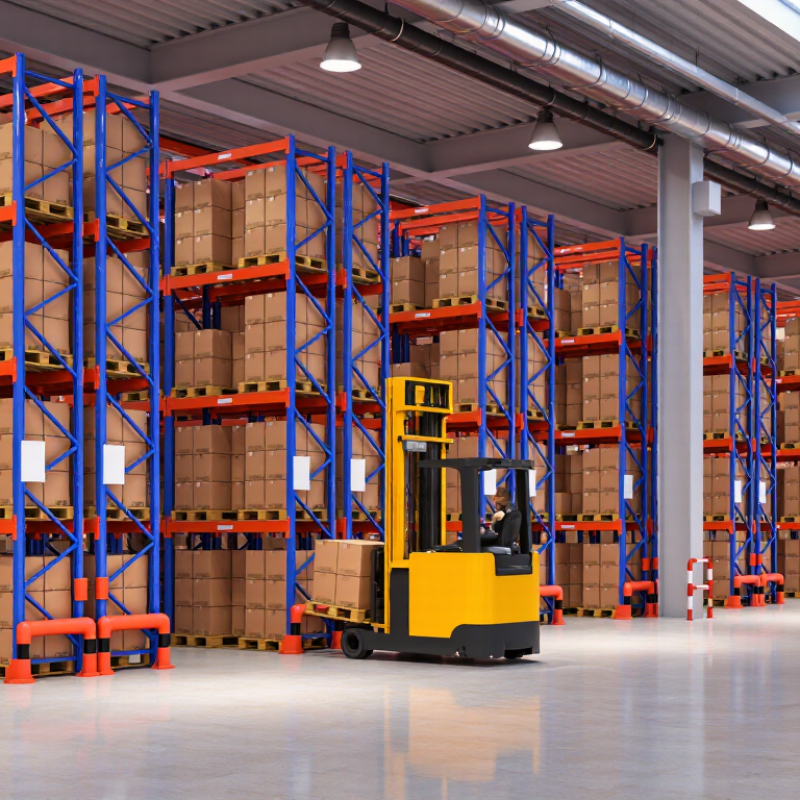
10 Best Drive-in Storage Manufacturers for Global Buyers?

What Is Drive-In Storage and How Does It Work?

Drive-in storage is a high-density pallet system designed for products with limited stock-keeping units. A forklift enters the rack tunnel, places pallets on supporting rails, and reverses through the same opening. There are no front access aisles between every rack row. This saves floor space, but reduces picking flexibility. The system usually follows last-in, first-out rotation. That suits seasonal goods, uniform cartons, and bulk inventory. It is less suitable for products requiring strict first-in, first-out control.

According to Grand View Research, the global warehouse racking market was valued at approximately USD 9.7 billion in 2023. This growth reflects pressure to use expensive warehouse space more efficiently. However, density is not the only purchasing measure. The rack must match pallet dimensions, load weight, forklift clearance, and building height. Small errors become costly.

The National Institute for Occupational Safety and Health reports that forklifts cause about 85 fatal accidents and 35,000 serious injuries annually in the United States. Therefore, tunnel width, rail protection, impact guards, and operator training deserve careful review.

A qualified engineer should verify the layout before installation. Real warehouses are rarely perfect. Uneven floors, changing pallet quality, and rushed loading can weaken an otherwise sound design.

Reference: Grand View Research, Warehouse Racking Market Report; NIOSH, Preventing Injuries and Deaths of Workers Who Operate or Work Near Forklifts.

Key Criteria for Evaluating Global Storage Manufacturers

Choosing a drive-in storage manufacturer requires more than comparing steel prices. Grand View Research estimated the global self-storage market at USD 58.26 billion in 2023, with continued growth expected through 2030. This expansion increases demand for dense, reliable pallet storage. However, market growth does not guarantee manufacturing quality.

Global buyers should examine load ratings, beam tolerances, steel thickness, galvanization, and corrosion protection. Ask for laboratory test records and structural calculations for local seismic and wind conditions. The 2023 World Bank Logistics Performance Index highlights reliability, tracking, and delivery timeliness as key supply-chain factors. These indicators also matter when evaluating a manufacturer’s export performance. Check production capacity, inspection procedures, packaging methods, spare-part access, and installation training. A low quotation can become expensive after delays or damaged components.

Tips:

Request a complete technical drawing before signing. Compare the declared load capacity with your actual pallet weight. Confirm whether safety testing covers your operating environment. ISO 9001 certification helps, but it does not prove every rack is safe. That needs verification. Speak with recent overseas customers, not only supplied references. Also review warranty exclusions carefully. Some manufacturers offer impressive documents but weak after-sales support. That uncomfortable gap deserves attention. Allow space for forklift turning errors, future pallet changes, and imperfect warehouse discipline. Real operations are rarely as tidy as the original plan.

10 Leading Drive-In Storage Manufacturers for International Buyers

International buyers evaluating the 10 leading drive-in storage manufacturers should examine engineering evidence, not only catalog prices. Drive-in racking supports high-density pallet storage by reducing aisles, making it suitable for cold rooms, bulk goods, and uniform pallets. Grand View Research estimates the global warehouse racking market reached approximately US$9.7 billion in 2023, with a projected 7.5% CAGR through 2030. This growth reflects stronger demand for space-efficient storage systems.

A reliable manufacturer should provide load calculations, upright specifications, rail tolerances, and forklift clearance requirements. Ask for testing against recognized standards, such as EN 15512 or equivalent regional codes. ISO 9001 certification can support process reliability, but it does not replace structural verification. Check welding quality, coating thickness, corrosion resistance, and export packaging. Container loading details matter. Damaged frames create delays before installation begins. I would also request references from warehouses with similar pallet weights and temperature conditions. A low quotation may become expensive after reinforcement, spare parts, or redesigns.

Tips: Compare ten manufacturers using the same technical brief. Include pallet dimensions, load weight, storage depth, forklift type, seismic conditions, and delivery location. Request a signed layout and warranty terms. Confirm whether installation guidance and replacement components are available locally. Do not assume the tallest system is the most efficient. Deep lanes reduce travel space, but they can increase stock-access time and complicate inventory rotation. That trade-off deserves careful review.

Comparing Design, Quality, Customization, and Support

Design should begin with pallet flow, not polished drawings. Drive-in systems suit dense, low-SKU storage, especially for uniform pallets and cold-chain rooms. The 2024 MHI Annual Industry Report found that 83% of supply-chain leaders expect technology investment to increase. Manufacturers should therefore provide load data, impact protection, and integration-ready layouts. A rack that saves space but slows forklift movement is not efficient.

Quality depends on steel traceability, weld consistency, coating performance, and independent inspection. EN 15635 recommends regular racking inspections and documented damage control. Ask suppliers for load calculations, material certificates, and installation tolerances. Grand View Research places the global warehouse racking market on a strong growth path through 2030, but market growth does not guarantee dependable products. Some catalogs still hide beam deflection limits. That deserves scrutiny.

Customization should cover pallet dimensions, aisle clearance, seismic conditions, and temperature exposure. Support matters after delivery. Remote advice cannot repair a bent upright at midnight. Look for spare-part availability, inspection training, bilingual manuals, and response-time commitments. The 2023 Deloitte Global Supply Chain Survey reported that resilience remains a major investment priority for manufacturers. Yet buyers often compare only price and storage density. I have seen that choice create expensive compromises. The better question is practical: can the supplier prove performance under your real load, traffic, and maintenance conditions?

10 Best Drive-in Storage Manufacturers for Global Buyers

Global Buyer Evaluation Priorities: Design, Quality, Customization, and Support

This benchmark uses a 100-point procurement weighting model based on common requirements for drive-in storage projects. Structural load capacity, total cost, customization, corrosion protection, installation support, and compliance documentation are practical criteria for comparing manufacturers without ranking individual companies or brands.

How to Select the Right Manufacturer for Your Warehouse

How to Select the Right Drive-in Storage Manufacturer for Your Warehouse

Choosing among drive-in storage manufacturers requires more than comparing prices. Start with your warehouse conditions: pallet dimensions, load weights, forklift type, aisle width, and daily loading frequency. A capable manufacturer should turn these details into clear layout drawings and verified load calculations. Ask whether the structure suits your floor condition, temperature range, and local safety requirements. Small design errors can create expensive operational problems.

Inspect the manufacturer’s production process before signing. Look for material traceability, weld inspection, coating controls, and documented quality checks. Request samples of installation manuals, maintenance schedules, and testing records. Factory photos help, but an independent visit is stronger evidence. Speak with recent customers about delivery accuracy, technical support, and replacement parts. Their answers may reveal more than polished sales presentations.

Do not judge reliability by a low quotation alone. Compare steel specifications, protective finishes, installation labor, warranty coverage, and future expansion options. A supplier should explain how damaged rails or uprights can be replaced without disrupting the whole system. Communication matters too. Can the engineering team answer practical questions quickly and clearly? I have seen projects delayed because the buyer accepted vague drawings. That mistake is easy to repeat. Leave room for review, because the cheapest design may not be the safest or most adaptable one.

FAQS

What is drive-in storage?

Drive-in storage is a dense pallet-racking system for products with few stock-keeping units. A forklift enters the rack tunnel and places pallets on supporting rails. It exits through the same opening. There are fewer access aisles.

How does drive-in storage save warehouse space?

The system removes aisles between many rack rows. More pallets fit within the same floor area. However, dense storage reduces picking flexibility. Space savings are not everything.

What inventory rotation does drive-in storage usually follow?

Drive-in storage usually follows last-in, first-out rotation. It suits seasonal goods, uniform cartons, and bulk inventory. It is less suitable for strict first-in, first-out requirements. Product rotation needs careful review.

Which products are suitable for drive-in storage?

Suitable products have similar pallet sizes and stable packaging. Seasonal inventory and large quantities often work well. Mixed cartons may create loading problems. Changing pallet quality can weaken the design.

What details should be checked before selecting a system?

Check pallet dimensions, load weights, forklift type, aisle width, and loading frequency. Confirm the building height and floor condition. Temperature ranges also matter. Small measurement errors become expensive.

What safety features should a drive-in system include?

Tunnel width must provide safe forklift clearance. Rail protection and impact guards help limit damage. Operators need practical training and clear procedures. Rushed loading remains a real risk.

How can a warehouse evaluate a storage system manufacturer?

Ask for layout drawings and verified load calculations. Review material traceability, weld inspections, coating controls, and quality records. Request installation manuals and maintenance schedules. Factory photos alone are weak evidence.

What should be compared besides the quoted price?

Compare steel specifications, protective finishes, installation labor, warranty terms, and expansion options. Ask how damaged rails or uprights can be replaced. Check technical response times. The cheapest option may not adapt well.

Why should an engineer review the proposed layout?

An engineer can verify loads, clearances, floor conditions, and structural suitability. Uneven floors may affect installation and stability. Real warehouses are rarely perfect. A vague drawing can delay the project.

Conclusion

Drive-in Storage is a high-density warehouse racking solution designed to maximize floor space by allowing forklifts to enter storage lanes and place pallets on continuous rails. Unlike selective racking, it reduces the need for multiple aisles, making it especially suitable for warehouses handling large quantities of similar products with relatively low SKU variety. Its performance depends on sound structural design, load capacity, pallet compatibility, safety features, and efficient installation.

For global buyers, selecting a reliable manufacturer requires evaluating material quality, engineering standards, customization options, production consistency, delivery capability, technical support, and after-sales service. This guide compares ten leading types of suppliers according to their design expertise, manufacturing quality, adaptability, and international support. Buyers should also consider warehouse dimensions, goods turnover, climate, local safety requirements, budget, and future expansion plans. The right manufacturer should provide a practical, durable, and cost-effective Drive-in Storage system that improves space utilization while maintaining safe and efficient warehouse operations.

Charlotte

Charlotte

Charlotte is a seasoned marketing professional with a deep understanding of the company's portfolio and a passion for elevating its presence in the market. With a keen eye for detail and a commitment to excellence, she ensures that our professional blog is regularly updated with insightful articles......